What’s Actually Happening When Your Voice Loses Its Ground — and Why Sitting Still Makes It Worse
I got on a podcast recently and felt it happen.
Not a catastrophic failure. Just the thing I know — the solar plexus going hollow, the voice moving up into the throat, the sentences not quite finishing themselves the way they do when everything is working. I know my material cold. I’ve written three books on this exact subject. And there it was anyway, the old pattern, showing up like it owned the place.
Because I had been slacking on the practice. Specifically on selfie therapy — one of the eight fundamentals I cover in my work — which is the regular habit of talking to yourself on camera, listening back, and staying honest about what you hear. When I do it consistently it keeps the instrument tuned. When I don’t, the rust comes back faster than you’d think. And the rust doesn’t announce itself until you’re sitting across from a microphone and the stakes are real.
So this article comes from that experience. Not from the comfortable distance of someone who solved the problem. From someone who knows exactly what the problem is, where it lives, why it persists, and what he wasn’t doing that let it come back.
If any of this sounds familiar, it’s for you.
The Solar Plexus Is Not a Metaphor
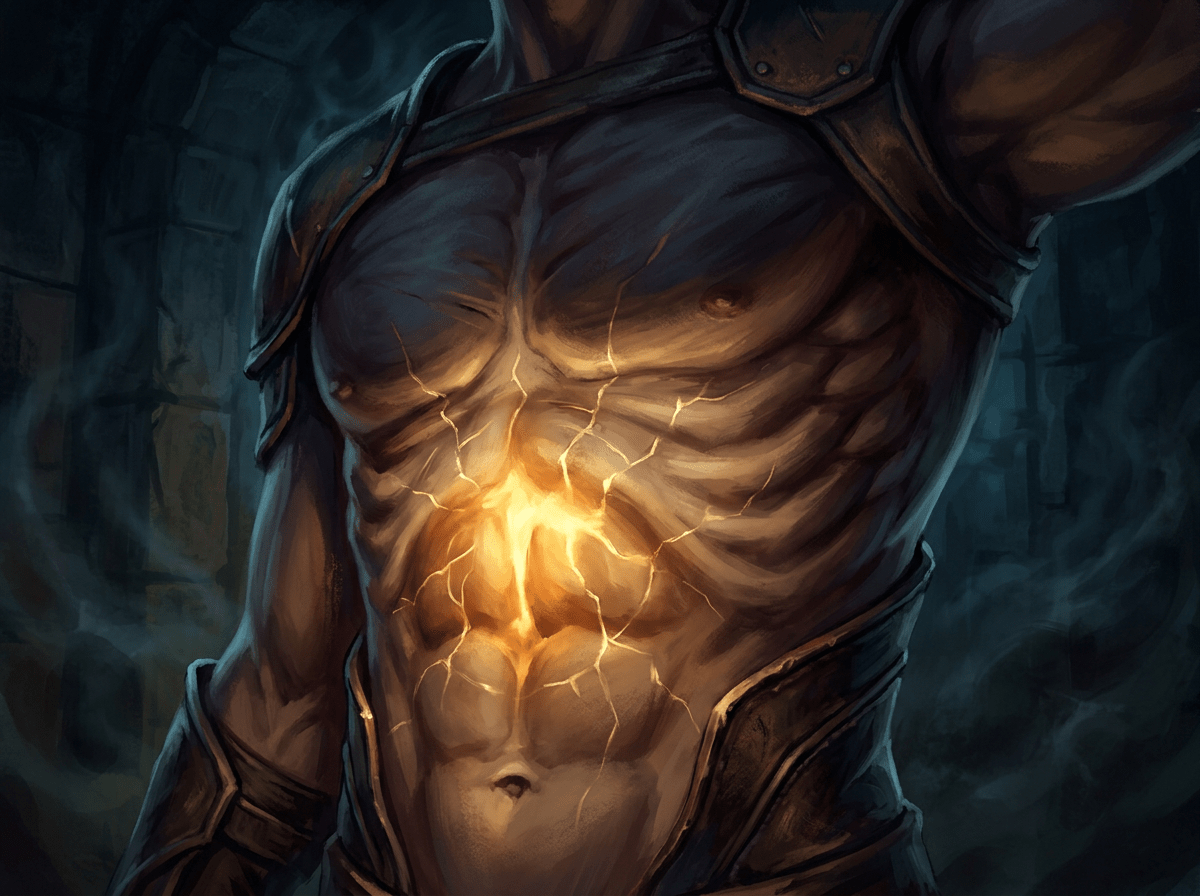
When people say they felt something in their gut, they are not being poetic. The solar plexus — clinically called the celiac plexus — is the largest nerve complex outside the brain. It sits in the upper abdomen and functions as a relay hub between the enteric nervous system, the vagus nerve, and the sympathetic chain. It is processing threat signals, social signals, and autonomic state information in real time and feeding that information upward continuously.
When it goes hollow in a high-stakes speaking situation, three things are happening simultaneously.
The sympathetic nervous system has spiked and pulled blood and energy toward the extremities. The body is preparing to move, not to speak. The core partially vacates. The voice loses its grounding in the torso because the torso has stepped back from the conversation.
The vagus nerve has partially withdrawn. The vagus nerve governs what researcher Stephen Porges calls the social engagement system — the hardware that tunes the larynx and middle ear for nuanced human communication. When safety is perceived, that system is online and the voice has warmth, range, and authority. When threat is perceived, it withdraws. Not because you became less intelligent or less capable. Because the hardware for sophisticated social communication went partially offline.
The diaphragm has locked up. The diaphragm attaches directly above the solar plexus via two muscular legs that connect to the lumbar spine right alongside the celiac plexus. When the solar plexus region goes into threat response, the diaphragm tightens as part of the same bracing pattern. The breath moves into the chest. The sentences stop carrying because there isn’t enough air behind them to get them to the end.
This is one connected system. The solar plexus, the diaphragm, the vagus nerve, and the voice are not separate problems. They are the same event happening in the same location at the same time.
The Fascia Nobody Talks About
Surrounding all of this is fascia — the continuous connective tissue network that wraps and interpenetrates every muscle, organ, nerve, and bone in the body. It is not passive structural material. It contains sensory nerve endings that actively communicate with the nervous system and it changes its physical structure in response to sustained emotional states.
The ribcage sits at the center of the fascial network. The fascia here connects upward into the throat, jaw, and skull. Downward into the abdomen and pelvis. Inward around the lungs and heart. And directly into the diaphragm, which is itself as much a fascial structure as a muscular one.
The front of the ribcage is where protective bracing lives. Years of threat response, of self-protective posture, of chronic low-grade vigilance — that history shortens and thickens the anterior fascial tissue. The sternum sinks slightly. The shoulders round forward. The chest cavity narrows. This directly compresses the vagus nerve on its path through the region. A compressed vagus nerve is a less functional vagus nerve. Less vagal tone means less capacity to stay regulated under social pressure.
The back of the ribcage is where the older, deeper holding lives. The thoracic spine houses the sympathetic chain ganglia — the nerve clusters that run the fight or flight response — embedded in the posterior fascial tissue. When the fascia around the back of the ribcage is chronically restricted, it mechanically compresses the tissue around those ganglia. The threshold for sympathetic activation drops. The body tips into threat response faster because the hardware is already under mechanical pressure.
The fascia stores the physical memory of emotional experiences. Not metaphorically. The tissue literally remodels around sustained emotional states and the patterns persist long after the original experience has passed. The ribcage is the primary location for this storage because it is where the body’s most reflexive protective responses live — the curl inward, the breath-hold, the bracing against impact real or imagined.
This is the physical address of the pattern. It has a location. It can be reached.
Where It Came From — My Experience and Yours
I was physically abused as a kid. After the abuse came the confinement — hours in a room to sit with it until I had “learned my lesson.”
What that did to the nervous system is something I understand now that I didn’t understand then. The abuse delivered full activation — adrenaline, cortisol, the complete threat response, everything the body mobilizes when survival is on the line. And then the confinement prevented the one thing that would have allowed the nervous system to complete the cycle and return to baseline.
Movement.
Over and over, the body mobilized everything it had and was then physically prevented from discharging it. So the energy stayed. Every single time. And the nervous system learned a lesson that was completely logical given the circumstances: activation does not complete. Stillness is what is required when the system is most dysregulated. Be still. Stay in the room. Figure out what you did wrong.
That is not a belief. That was trained into the tissue by direct physical experience before I had the language to name what was happening.
I want to be direct about this because the world keeps trying to soften language to make difficult things seem less impactful. That’s not a service to anyone. What happened was what it was, and naming it plainly is part of how it loses its authority.
But here is the thing I want you to hear clearly: your experience does not have to be that extreme for the same pattern to be running in your body.
An emotional household where big feelings were met with “go to your room,” “stop crying,” “calm down right now,” or hours of cold silence produced the same neurological wiring at a lower intensity. A child who was repeatedly activated and then required to be still and quiet to restore the peace learned the same lesson. The activation mobilized. The completion was prevented. The tissue stored it. The threshold for the threat response dropped.
Different origin. Same pattern. Same physical address.
What It Gets Mislabeled As
Most people carrying this pattern have been told — or told themselves — that they have anxiety, or depression, or lack of discipline, or a meditation practice that isn’t advanced enough yet. They’ve been handed a psychological explanation for what is fundamentally a physiology problem with a specific history.
The diagnosis has been wrong. And wrong diagnosis produces wrong treatment.
If you’ve ever sat in meditation while dysregulated and found that it made things worse rather than better, that is not a failure of your practice. That is the correct tool being applied to the wrong problem. Sitting still with a dysregulated nervous system is asking a presence practice to fix a physiology event. The body mobilized energy for movement. Stillness gives that energy nowhere to go. It stays as tension, as cortisol, as the hollow feeling in the solar plexus, as the narrative that something is fundamentally wrong with you.
The narrative is the machine running its program. The hollow feeling is a physiology event. Those are two different things and they require two different responses.
The Shame Layer
This is the one that does the most damage and gets talked about the least.
When the pattern activates in a high-stakes moment — on a podcast, in a presentation, in a conversation that matters — and your performance doesn’t match what you know you’re capable of, there is a specific shame that follows. Not general embarrassment. The particular shame of knowing better and still not doing better. Of having the knowledge and losing access to it anyway. Of sounding like someone who doesn’t know what they’re talking about when you know exactly what you’re talking about.
That shame becomes its own input. It feeds back into the same activation cycle that produced the original failure. The nervous system reads shame as threat. Threat activates the same pattern. The pattern produces more shame. The loop runs.
And then the loop gets intellectualized. I need to figure out what’s wrong with me. I need to understand this more deeply. I need to go meditate and examine myself.
Which is the original conditioning running in perfect disguise. Be still. Stay in the room. Figure out what you did wrong.
The shame is not evidence that something is wrong with you. The shame is the machine doing what the machine does with a physiology event it doesn’t understand. Name it as that and it loses most of its authority immediately.
What the Completion Cycle Actually Is
The nervous system’s threat response is a complete biological program with a beginning, a middle, and an end. Most people have the beginning and the middle. The end — the discharge, the completion, the return to baseline — got interrupted somewhere in the history and never got reinstalled as an available option.
Completion looks different for different people. A spontaneous shake or shudder moving through the body. A wave of emotion that arrives quickly and passes quickly and leaves genuine calm behind it rather than more agitation. An exhale that feels like something actually released rather than just air leaving the lungs. A yawn in the middle of a breathing practice which is a parasympathetic indicator — the body signaling that it is downregulating. Warmth returning to the hands and feet as the blood redistributes away from the extremities.
You will know it when it happens because it feels like relief that you didn’t manufacture. The system did something on its own and reported it.
Getting there requires doing the physical thing before the intellectual thing. Every time. Without negotiation.
The Sequence That Actually Works
When the pattern activates, the intervention is physical first and cognitive never — at least not in the acute moment.
Move. Jump, shake, walk fast, do something vigorous for sixty seconds minimum. This is not exercise. This is completing the activation cycle the body started. The threat response mobilized energy for movement. Give it movement. The nervous system does what it was trying to do, registers completion, and begins to downregulate on its own timeline.
Then breathe. Not deep breaths in — the exhale is the regulation mechanism. Four counts in, eight counts out, belly expanding on the inhale, full release on the exhale. Five to ten minutes. You are now working with a nervous system that has already started to settle rather than one that is still mid-activation with nowhere to send its energy.
Then, if you still want to reflect, reflect. But by then you probably won’t need to, because the thing you were going to spend an hour analyzing has already resolved in the body.
The movement is not optional and it is not metaphorical. For someone whose specific history involved activation followed by enforced stillness, movement after dysregulation is the completion of something that was interrupted repeatedly at the age when the nervous system was forming its most foundational patterns. It is not a coping strategy. It is a correction to something that was never allowed to finish.
What Keeps the Instrument Open
The practices that address this at the deeper level are not complicated. They are just consistent.
Diaphragmatic breathing daily. Not as a crisis intervention but as maintenance. A full three-dimensional breath — front, sides, and back expansion — is a fascial release technique as much as it is a breathing practice. Each full breath stretches the intercostal fascia, the anterior chest fascia, the posterior thoracic fascia, and the diaphragm attachments simultaneously. Done consistently it is one of the most powerful tools available for gradually freeing the ribcage tissue.
Singing. The vibration produced by sustained vocalization travels through the chest cavity and directly stimulates the fascial tissue and the sensory nerve endings embedded in it. This is why singing can produce unexpected emotional releases. The vibration is physically moving through stored material. It works from the inside out in a way that breathing alone cannot reach.
Reading aloud. Trains the conversion between thought and spoken sentence, builds breath support for complete thoughts, and reduces the charge around hearing your own voice. The authority register lives here.
Selfie therapy. Talking to yourself on camera, listening back, and staying honest about what you hear. This one I was not doing. This one I let slip. And the podcast showed me what it costs when you do.
The practices are not separate items on a wellness checklist. They are different angles of approach to the same restricted tissue, the same incomplete activation cycles, the same fascial holding patterns that have a specific history and a specific physical address.
None of this is quick work. Tissue that has been holding for decades does not release in a session. Some days nothing seems to move and some days something significant shifts without warning. Both are part of the same process. The only thing that doesn’t work is stopping.
A Note on Getting Help
For people with significant trauma history, self-directed practice is valuable and not always sufficient on its own. Somatic Experiencing, EMDR, and skilled myofascial and osteopathic practitioners work directly on this layer. Not as a replacement for the daily practices — as an accelerant. A good practitioner can reach tissue in a single session that might take months of solo practice to access. Worth knowing about and worth pursuing if the self-directed work keeps hitting the same ceiling.
The Last Thing
The pattern that shows up when the stakes are high is not a character flaw. It is not evidence of insufficient preparation or inadequate commitment or a personality that isn’t built for this.
It is a physiology event with a history, a physical address, and a correction that the body already knows how to perform if you give it the conditions to do so.
The room was the problem. Not you.
Move first. Breathe second. The rest takes care of itself.






Leave a Reply