
Why What You Know Isn’t Always What You Can Access — and What to Do About It
I recently read something I wrote about love.
Not someone else’s writing about love. Mine. Words I generated from somewhere real, that meant something when they came out, that I put down because they were true and I wanted them to exist somewhere outside my head.
“The false belief is that love is something to be gotten from the external instead of something we are to share from the infinity of who and what we are.”
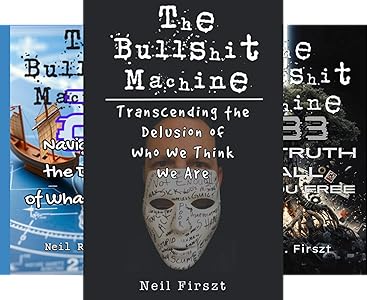
-The Bullshit Machine: Transcending the Delusion of Who We Think We Are
And reading them felt foreign.
Not wrong exactly. Not embarrassing. Foreign. Like reading a letter written by a version of me I couldn’t quite locate in the moment of reading. The ideas were familiar the way a photograph of yourself from ten years ago is familiar — clearly you, clearly real, and somehow not quite accessible from where you’re currently standing.
The first instinct was the one most people have in that moment.
Maybe I was performing something I don’t actually have. Maybe the writing was more articulate than I actually am. Maybe I got lucky with it and couldn’t replicate it now because it wasn’t really mine to begin with.
That instinct is wrong. And understanding why it’s wrong is thIS whole article.
What Actually Happened
The experience has a name. State dependent access. And once you understand the mechanism the foreignness stops feeling like evidence of fraud and starts feeling like information about how the system works.
Here is the short version.
What you can access depends on where you are. Not physically. Internally. The person who wrote the love explanation and the person reading it were running different internal configurations at different times. The material was generated inside a specific state — a particular neurochemical environment, a particular physiological condition, a particular emotional and psychological opening. And it was being read from a different state entirely.
The material didn’t change. The key changed.
And the current state didn’t have the right key.
This is not a character flaw. It is not inconsistency or fraud or evidence that the original work was performed rather than genuine. It is a state dependent system operating exactly as state dependent systems operate. Which is to say — what’s accessible varies with the internal conditions that determine access.
The foreignness is not the writing being wrong. It is the reading state being different from the writing state.
That distinction is everything.
State Is Not Just Mood
Most people think of state as emotional. Happy, sad, anxious, calm. And emotional tone is part of it. But the internal configuration that determines what you can access is far more comprehensive than mood and understanding the full scope of it changes how you relate to your own variation.
Physiological state is the foundation everything else sits on. Blood sugar, hydration, cortisol levels, sleep debt, inflammation, whether you’ve moved recently, what you’ve eaten, your body temperature, your breathing pattern. These are not background conditions. They are active determinants of which neural pathways fire easily and which require more activation energy to reach. A dehydrated brain is a chemically different brain running different access patterns than a hydrated one. This is not metaphor. The electrochemical environment literally changes which doors are open.
Neurochemical state determines the texture of consciousness itself. The specific balance of dopamine, serotonin, norepinephrine, acetylcholine, GABA, and glutamate at any given moment opens specific kinds of access and closes others. Creative insight tends to come in high dopamine, lower arousal states. Analytical clarity tends to come in moderate activation states. Deep emotional and philosophical material tends to surface in low cortisol, high acetylcholine states — which is why it often arrives in meditation, long walks, or the hypnagogic space just before sleep. The knowledge isn’t gone in other states. The chemical key that opens that particular door just isn’t present.
Postural and muscular state is more significant than almost anyone accounts for. The body position and movement pattern active when you generate something becomes part of how it gets encoded. This is why people pace when they think and then can’t find the thought sitting still. Why the insight that came on a walk is harder to reach at a desk. Why some people can only write standing up or only think clearly moving. The proprioceptive input was part of the state. Change the body and you change the access conditions.
Environmental state gets encoded alongside content in ways that seem irrational until you understand the mechanism. The sensory environment — light quality, sound, temperature, smell — is part of the filing system. This is why a specific smell can unlock a complete experiential state in seconds. Why certain rooms produce certain kinds of thinking. Why the same person working on the same material in a different location produces different quality output. The environment isn’t just context. It’s part of the key.
Social state changes what’s available depending on who is or isn’t present. Material encoded in solitude can be harder to access in company. Specific people unlock specific states and the knowledge and capability associated with them. Some of your best thinking may only be fully available in conversation with a particular person. Some of it may only be available alone. Neither is the real you. Both are the real you in different configurations.
Time of day is a real variable that most people fight rather than work with. Circadian rhythms don’t just affect energy levels. They affect which neural networks are most active and therefore which kinds of thinking are most available. Most people have a peak window for their deepest access and it tends to be the same two to three hour period every day. Material generated in that window has a different quality than material generated outside it. This is not laziness or inconsistency. It is the system running on its natural cycle.
You’ve Felt This Before
You already know this system from the inside. You just haven’t had a framework for it.
The insight in the shower that was completely gone by the time you reached a place to write it down. The state that produced the insight didn’t survive the transition to a different environment. The idea was real. The state it lived in didn’t transfer.
The thing you wanted to say in a conversation — the exact right response, perfectly articulate, completely available — that arrived twenty minutes after you left the room. In the room the state shifted under social pressure and the access dropped. In the car afterward the state normalized and the access returned. Too late to be useful but completely real.
The song that takes you back to a specific period of your life so completely that you briefly feel like that version of yourself again. The music reactivated the encoded state so thoroughly that the knowledge, the emotional register, even the specific way of thinking associated with that time became temporarily accessible. That’s not nostalgia. That’s encoding specificity working involuntarily and precisely.
Reading something you wrote in a different emotional state and not recognizing yourself in it. Which is where this article started.
The performer who is brilliant in rehearsal and locks up in performance. Or the reverse — flat in rehearsal and fully alive in front of an audience. Different states activating different access patterns. Neither is the real performer. Both are the real performer in different configurations.
The therapy insight that makes complete sense in the session and is completely unavailable in the actual situation the therapy was supposed to address. The therapy state and the triggered state are different states with different access. Understanding something in a calm therapeutic environment doesn’t automatically install that understanding in the activation state where the behavior actually occurs.
The thing you know cold when someone asks you directly and cannot find when you’re trying to explain it to someone whose opinion matters. The stakes changed the state. The state changed the access. The knowledge didn’t go anywhere. The door closed.
The writer who can only write in one specific location or one specific time of day and produces nothing of value anywhere else. Not superstition. Not precious artistic temperament. Encoding specificity and state induction working together. The location and time are part of the key that opens the access.
The Impostor Syndrome Misreading
Here is what goes wrong when the state dependent system runs without a manual.
The low-access state evaluates the high-access state’s output and concludes fraud.
You read the love explanation from inside a defended, low-access state. The writing reflects a version of you that had access to something the current state can’t quite reach. And the gap between what’s on the page and what’s currently available internally gets interpreted as evidence that the page version wasn’t real. That you were performing something you don’t actually have. That you got lucky and couldn’t replicate it because it wasn’t genuinely yours.
This interpretation is structurally identical to a person who is colorblind concluding that colors don’t exist because they can’t see them. The absence of access in the current state is real. The conclusion that the material was never real is wrong.
The protection system makes it worse. In low-access states the strategies we run to manage visibility and threat tend to be more active. The preemptive self-destruction pattern has more room to operate. So not only are you reading high-access material from a low-access state — you’re reading it with the self-attack system more fully engaged than usual. The gap between the page and the current state feels like evidence of fundamental inadequacy rather than evidence of range.
It is evidence of range.
A musician who plays something transcendent on Tuesday night and can’t find it Wednesday morning hasn’t lost the ability. They’re in a different state with different access. The Tuesday performance was real. The Wednesday morning flatness is also real. Neither is the whole picture. Both are the same instrument in different configurations.
The love explanation was real. You were just reading it from a different room than the one it was written in.
The Multiple Self Problem
If different states make genuinely different versions of you available — different knowledge, different intelligence, different emotional range, different capacity for certain kinds of thinking — then the question of which version is the real you gets complicated in a useful way.
The standard answer is that there is a continuous self underlying all the states and the states reveal different aspects of it. That answer is probably correct. It is also less satisfying than it sounds because it doesn’t address the practical problem.
Which version of you is making the important decisions.
The version of you in a low-access, high-protection state making conclusions about your capabilities, your relationships, your worth, your work — that version is working with a fraction of the available data. It is making real decisions with real consequences from inside a configuration that doesn’t have access to the full picture.
This is why major decisions made in states of fear, exhaustion, or high activation tend to look different in retrospect from calmer states. Not because calm is more rational in a cold way. Because calm has access to more of what you actually know and value. The low-access state isn’t seeing clearly. It’s seeing accurately within its limited range and concluding that the limited range is the whole picture.
State awareness — knowing which state you’re in and what that state does and doesn’t have access to — is one of the most important meta-skills available. Not to eliminate low-access states. They serve functions. But to know when you’re in one and what decisions and conclusions should be suspended until the access improves.
Don’t make permanent decisions from temporary states. Don’t make identity conclusions from low-access configurations. Don’t evaluate your high-access work from your low-access position.
The love explanation deserves to be read from the state that wrote it.
The Translation Problem
There is a specific frustration that comes from knowing something and not being able to say it.
Not forgetting it. Knowing it. Fully. With complete internal access to the understanding. And being unable to produce a clean linear articulation of it on demand in real time under social pressure.
This is not a knowledge problem. It is a translation problem. And those are completely different problems with completely different solutions.
Knowledge is what you have. Translation is the specific skill of converting what you have into clean linear language that someone else can follow in real time. Those are separate capacities that develop on separate timelines and depend on overlapping but distinct states for their access.
Most people who are ahead of the curve on their own thinking have exactly this experience. The territory is real. The understanding is genuine. The translation into articulate language that tracks for someone else is a separate skill that requires its own practice and its own conditions.
The frustration makes it worse. This is the mechanical detail that matters most.
When the translation fails — when you know what you know and can’t get it out cleanly — the frustration is a threat signal. Threat signal activates the protection system. The protection system reduces access. Reduced access makes the translation harder. Harder translation produces more frustration. The loop tightens and what started as a translation gap becomes a full activation event in about thirty seconds.
And then it feels like not knowing. Which it isn’t. But it feels exactly like it.
The person who watched this happen to them and concluded I just can’t explain things clearly or I sound like an idiot when I talk about this or I don’t actually know this as well as I thought — that person misread a translation problem as a knowledge problem and made an identity conclusion from inside a frustration spiral.
The knowledge was there the whole time. The spiral just closed the door.
The solution to a translation problem is translation practice. Not more study. Not deeper understanding. The specific practice of converting what you know into spoken language under conditions of gradually increasing pressure. Reading aloud. Selfie therapy. Regular articulation of ideas in low-stakes conditions where the frustration spiral doesn’t have room to start. Each rep builds the pathway between the knowing and the saying. Not the knowing itself. Just the road between them.
The knowing is already there. The road just needs more traffic.
States Can Be Approached
Here is the practical turn.
States don’t have to arrive randomly. They can be deliberately approached. Not perfectly and not instantly. But reliably enough to be useful.
Music is one of the most consistent state inducers available. Specific music associated with a particular state — either because it was present when the state was encoded or because it reliably produces a similar neurochemical environment — can reactivate that state faster than almost any other input. This is why athletes use specific playlists. Why writers often need the same music on to access flow. The music is a state key. Find the keys that open your specific doors and keep them available.
Movement pattern is part of the encoding. Recreating the movement associated with a productive state — the walk, the pace, the specific physical activity — helps reactivate the state. If the insight came on a walk, walk to find it again. This is not superstition. It is encoding specificity applied deliberately.
Breath pattern is bidirectional. The state produces the breath and the breath can reactivate the state. The slow belly breath of genuine calm can begin inducing calm even when the state isn’t present. The extended exhale specifically activates the parasympathetic system and begins moving the nervous system toward the states in which deeper material is most accessible. Four counts in. Eight counts out. Before the work. Before the conversation. Before the podcast.
Environment is a lever. The sensory conditions associated with your best access are worth identifying and recreating deliberately. The light level, the temperature, the sounds or their absence, even the smell of the space. These are not precious preferences. They are access conditions. Treat them as such.
Time of day alignment is the highest leverage and the most consistently ignored. Identify your peak window — the two to three hours when your deepest access is most reliably available — and protect it for the work that requires that access. Stop scheduling the most important thinking in the slots left over after everything else. The state that produces your best work has a preferred time. Work with it.
None of these are guarantees. States are responsive not mechanical. But deliberately approaching the conditions associated with your best access is significantly more reliable than waiting for the state to arrive on its own schedule and hoping it coincides with when you need it.
The Manual You Were Never Given
Most people interpret state dependent access as a personal failing.
The knowledge should be available all the time. The articulation should work on demand. The confidence should be consistent. The creativity should show up when scheduled. When it doesn’t people conclude something is wrong with them. They are inconsistent. Unreliable. Not as capable as they seemed in better moments. Not as genuine as the good work suggested.
Nothing is wrong with them.
They are operating a state dependent system without a manual for how it works. Without understanding that access varies with internal conditions. Without knowing that the low-access state reading the high-access work is not seeing the whole picture. Without the framework to distinguish a translation problem from a knowledge problem. Without the tools to deliberately approach the states that open the right doors.
This is the beginning of the manual.
You have more range than the worst version of your access suggests. The love explanation was real. The insight in the shower was real. The thing you knew and couldn’t say was real. The performer who showed up on Tuesday was real.
They were all you.
Just in different rooms.
The rooms are more accessible than they seem once you know what opens them.
And the foreignness — that specific feeling of reading your own work and not quite recognizing yourself in it — that’s not impostor syndrome.
That’s just the wrong key in the wrong door.
Find the state that wrote it.
Read it from there.




Leave a Reply