
The Waiting Room
They say they love the Creator but hate the creation. They say they can’t wait to get to heaven but won’t be present on Earth. That’s not faith. That’s a machine.
Scroll down the article. “The Book of the Waiting Room” biblical version is posted at the bottom of this article.
I see a common problem with people who say they love God and Jesus and can’t wait to meet both — but hate this world that God has given us. They are waiting for something they don’t know what it is and pretending this gift of life is just some waiting room. I think this is a manipulation of religion and other authoritative entities, and I want to get down to the core of it — to understand the mechanism that creates this contradictory behavior.
The question isn’t whether God is real. It isn’t whether faith has value. It isn’t whether there’s something after this life. The question is narrower and more mechanical than that: what is the specific program running inside someone who says they love the Creator while treating the creation like something to be endured? Because that contradiction doesn’t just happen. It’s built. And it’s built by something that has a lot to gain from people who don’t notice it’s running.
This is meta bullshit machine work. The machine watching the machine. And if you’re not ready to see it, this article will bounce off you like every other one did. But if you’re here, you’re probably ready. So let’s go under the hood.
Start with the logic and see how far it gets before it breaks.
God is what we call the creator of everything. God is perfect. God’s creation is an expression of God’s nature. This world — the mountains, the oceans, the human body, the capacity for love, the complexity of a single living cell — is what God made. On purpose. And then, according to the text these same people claim to live by, God looked at it and said it was good.
And then the faithful look at the same creation and say: I can’t wait to leave.
Think about that for a second. They’re saying the artist is perfect and the art is disposable. They’re standing in a cathedral built by their father and saying I appreciate the craftsmanship but I’d really rather be somewhere else. And they’re calling that love.
The contradiction doesn’t register because it doesn’t need to. The bullshit machine has already categorized the contempt as holiness. Longing for heaven feels spiritual. Detachment from the world feels like wisdom. Discomfort with being alive feels like evidence that you belong somewhere better. The whole program is designed to make absence feel like devotion.
And nobody challenges it. Because who’s going to challenge someone’s faith? That’s the machine’s best defense. It wrapped itself in the one thing nobody is allowed to question.
“They say they love the Creator but can’t wait to leave the creation. That’s not devotion. That’s a return policy.”
Religion didn’t invent this mechanism. It inherited it.
The human mind already has a deep tendency to avoid the discomfort of full presence. Being here — actually here, in your body, in your circumstances, responsible for your experience and your choices — is hard. It requires you to deal with what’s in front of you rather than what you wish was in front of you. Most people, given the option, will find a way to be somewhere else in their heads while their body goes through the motions.
Religion gave that avoidance a name. It called it hope. It called it faith. It called it eternal perspective. It called it storing up treasures in heaven. And once the avoidance has a sacred name, the bullshit machine can run it at full capacity without anyone — including the person running it — recognizing what’s actually happening.
Because here’s what deferred living actually is when you strip the theology off it: it’s the belief that your real life hasn’t started yet. That this — all of this, the relationships, the work, the body, the years — is a rough draft. A rehearsal. A waiting room.
That belief is not spiritually advanced. It is the oldest and most common form of psychological avoidance there is. And when you dress it in scripture it becomes almost impossible to challenge, because the person running it genuinely believes their disconnection from life is evidence of their connection to God.
This one runs deep in Christian theology and it runs deeper than most people realize.
The flesh is weak. The spirit is willing. The world is fallen. The body is a prison. The desires of the flesh war against the spirit. This framework is threaded through centuries of Christian thought and it produces a specific result: people who distrust their own aliveness. Who feel guilty for pleasure. Who interpret joy with suspicion. Who experience the body as an obstacle rather than the vehicle through which every meaningful human experience arrives.
And here’s what makes it a machine rather than a theology: it’s self-reinforcing. The more disconnected from the body you become, the more uncomfortable embodied experience feels, which confirms the belief that the body is a problem, which deepens the disconnection. It’s a feedback loop that looks like spiritual growth from the inside and looks like someone slowly leaving their own life from the outside.
Now look at Jesus. The person these same people claim to follow.
Jesus was radically, almost aggressively present. He ate with people. He drank with people. He touched lepers when nobody would. He wept openly. He flipped tables in a temple. He fell asleep in a boat. He cooked fish on a beach for his friends. He was here. Fully in a body. Fully in the mess. Fully engaged with the physical, material, emotional reality of being alive on Earth.
The people who claim to follow him while treating their own embodied life as a spiritual inconvenience are not following his example. They’re following a program that was installed centuries after he lived by institutions that needed people to distrust their own experience.
“Jesus wept. He ate. He touched. He raged. He was here. The people who claim to follow him while waiting to leave are not following him. They’re following a program.”
This is where the mechanism stops being personal and starts being political.
The waiting room theology didn’t emerge naturally from the words of Jesus. It was engineered. Refined over centuries by institutions that understood something very clearly: a population that believes the real reward comes after death is a population that will tolerate almost anything in this life.
Poverty. Injustice. Abuse. Exploitation. Slavery. All of it becomes bearable — even meaningful — if you believe it’s temporary and the real payout is eternal. Don’t worry about the conditions of your life. Your treasure is in heaven. Don’t question the authority above you. God put them there. Don’t demand more from this world. This world is not the point.
That’s not spirituality. That’s crowd control. It’s a system designed to keep people passive, obedient, and grateful for their own suffering. And it works. It has worked for centuries. Because the machine runs on the most powerful fuel there is — the genuine human longing for meaning, for transcendence, for something beyond the visible — and redirects that fuel away from engagement with this life and toward patient endurance of it.
The people at the top of that system have never lived in the waiting room. They live in the palace. They always have. The waiting room is for the congregation.
Here’s where it gets personal again. And here’s where the connection to the broader BSM work becomes unavoidable.
A child raised by a parent who is perpetually oriented toward the next world learns something specific about this one: the person who is supposed to be here with me is somewhere else.
Physically present. Emotionally checked out. Spiritually aimed at an exit.
The child doesn’t experience the parent’s theology. The child experiences the parent’s absence. And it doesn’t matter if the absence is dressed in scripture and smells like Sunday morning. It lands the same way every other form of parental absence lands — as the message that this moment, this room, this life we’re sharing right now, is not enough to hold your attention.
That child grows up with a specific imprint: the people who love you are always waiting for something better than you. Presence is something other people get. The here and now is never where the important thing is happening.
And then that child builds a bullshit machine of their own. Maybe the same one. Maybe the opposite. But a machine either way, built to manage a wound that was inflicted by someone who didn’t even know they were inflicting it because the program told them it was love.
That’s the cost. Not theological. Not abstract. A child learning that the person who’s supposed to be with them is already gone. In spirit if not in body. Oriented toward a heaven that doesn’t include the present moment. Which means it doesn’t include the child standing in it.
None of this is an argument against God. Or against spiritual experience. Or against the possibility that there is something after this life that is beyond what we can currently perceive.
This is an argument against the machine.
The machine that takes a genuine human longing and turns it into an excuse not to be present. The machine that takes a sacred text and uses it to justify contempt for the world the text says God made and called good. The machine that dresses avoidance as devotion, absence as faith, and passivity as patience.
A person who reads the teachings of Jesus and concludes that radical presence, fierce love, and full engagement with this world are the point — that the kingdom of heaven is within you, here, now, in this body, in this life — that person is doing the work.
A person who reads the same text and concludes that this world is a fallen waiting room they need to endure until something better arrives has handed their pen to an institution that needs them to stay seated.
Same text. Same technology. Completely different relationship with it.
The question — and it’s the only question that matters — is whether you’re the author of your own understanding, or whether the machine is writing the story while you sit in the waiting room and call it faith.
The door isn’t locked. It never was.
But you have to want to see it.
The Book of the Waiting Room
Also Called the Book of the Saved
Concerning Those Who Love the Maker and Despise the Making,
and the Machine That Taught Them to Call Absence Faith
CHAPTER 1
The Contradiction of the Faithful
1:1And there arose in the congregations a people who loved the Lord their God with great fervor, and who sang His praises with lifted hands, and who declared His creation to be magnificent and His wisdom to be beyond understanding.
1:2And then with the same mouth they said: I cannot wait to leave this place.
1:3And no one in the congregation heard the contradiction. For the machine had dressed it in the garments of holiness, and it looked very fine.
1:4For consider: if the Lord made the heavens and the earth and all that is in them, and looked upon them and called them good — then who is the servant to look upon the same work and call it a waiting room?
1:5Is the clay grateful for the potter and yet disgusted by the pot? Does the painting praise the painter and then resent the canvas? Does the child thank the father for the gift and then ask for the receipt?
1:6And yet this is what the faithful do. They say: God is love. God is perfect. God made this world. And then: This world is fallen and I long for another.
1:7That is not devotion. That is a return policy.
Selah.
CHAPTER 2
The Machine That Made Absence Holy
2:1Now hear the mechanism, for it is older than the church and more patient than the preacher.
2:2The human heart has always been restless in the present. To be fully here — in the body, in the circumstance, in the weight and wonder of the moment — is hard. It demands everything. And the heart, being what it is, looks for an exit.
2:3And religion came along and gave the exit a name. It called it hope. It called it faith. It called it eternal perspective. It called it storing up treasures in heaven.
2:4And once the exit had a sacred name, no one questioned why so many of the faithful were using it.
2:5For what is deferred living but the belief that your real life hath not yet started? That this — the marriage, the children, the work, the body, the years — is a rough draft? A waiting room where you sit until your name is called?
2:6And the machine says: This is wisdom. This is perspective. This is the long view.
2:7But the machine is lying. For it has taken the deepest human longing — the longing for meaning, for transcendence, for something beyond the visible — and bent it away from life and toward the exit.
2:8And the one who runs this program believes their distance from life is evidence of their closeness to God. And that is the cruelest trick the machine has ever played.
Selah.
CHAPTER 3
Concerning the Body and the Contempt Thereof
3:1And the teachers said: The flesh is weak. The spirit is willing. The world is fallen. The body is a prison. The desires of the flesh war against the spirit.
3:2And the people heard this, and they learned to distrust their own aliveness. To feel guilty for pleasure. To interpret joy with suspicion. To treat the body as an obstacle rather than the only vessel through which love and music and sunlight and the touch of another person can be known.
3:3And the more they distrusted the body, the more uncomfortable the body became. And the more uncomfortable it became, the more the teaching seemed true. And this was not revelation. This was a feedback loop wearing a stole.
Selah.
3:4 Now consider the one they claim to follow.
3:5Jesus of Nazareth ate with sinners and did not count the calories of righteousness. He drank wine at a wedding. He touched lepers when no one else would extend a hand. He wept at the tomb of his friend and did not apologize for the tears.
3:6He flipped tables in a temple and did not file a complaint form first. He fell asleep in a boat in a storm, which is either supreme faith or supreme exhaustion, and either way it is the act of a man who was in his body completely.
3:7He cooked fish on a beach for his friends after he rose from the dead. Let that land. He came back from death and the first thing he did was make breakfast.
3:8That is not the behavior of a being who is trying to leave this world. That is the behavior of someone who is radically, almost aggressively, here.
3:9And the people who claim to follow him while treating their own life as a spiritual inconvenience are not following him. They are following a program that was installed centuries after he cooked that fish, by men who needed the congregation to sit still.
Selah.
CHAPTER 4
The Palace and the Pew
4:1And now hear the political truth of it, for it is not hidden. It was only inconvenient to say aloud.
4:2A people who believe the real reward cometh after death will tolerate almost anything before it.
4:3Poverty. Injustice. Abuse. Exploitation. Bondage. All of it becometh bearable if thou believest it is temporary and the real payout is eternal.
4:4And the institution said: Do not worry about the conditions of thy life. Thy treasure is in heaven.
4:5And the institution said: Do not question the authority above thee. God placed them there.
4:6And the institution said: Do not demand more from this world. This world is not the point.
4:7And the people sat. And the people endured. And the people called their endurance faith. And the people who told them to sit had never sat a day in their lives.
4:8For the men who built the waiting room theology did not live in the waiting room. They lived in the palace. They ate from golden plates. They wore robes that cost more than the village earned in a year. They held the keys to heaven and the deeds to the land, and the congregation had neither.
4:9The waiting room was for the people. The palace was for the priests. And the theology was the lock on the door between them.
Selah.
CHAPTER 5
What the Children See
5:1And now hear the cost. For this is where the theology becomes a wound.
5:2A child raised by a parent whose eyes are on heaven does not experience theology. The child experiences absence.
5:3The parent is in the room. The parent is at the table. The parent is in the house. But the parent is not here. The parent is oriented toward an exit, a destination, a somewhere-else that is more real to them than the child standing in front of them asking to be seen.
5:4And the child learns: the person who is supposed to be with me is always waiting for something better than this. Better than here. Better than now. Better than me.
5:5And the child does not have the language for this. The child only has the feeling. And the feeling is: I am not enough to make someone stay in this moment.
5:6And that child grows and builds a machine of their own. Perhaps the same machine. Perhaps the opposite. But a machine either way — built to manage a wound that was inflicted by someone who did not know they were inflicting it, because the program told them it was love.
5:7And the machine replicates. As it always does. From parent to child to parent to child, wearing a different Sunday hat in every generation but running the same program underneath.
Selah.
CHAPTER 6
The Door That Was Never Locked
6:1Now let the reader understand: this is not a word against God. Nor against the longing for something beyond what the eye can see. That longing is real and it is holy and it does not need a building or a program to exist.
6:2This is a word against the machine.
6:3The machine that takes a genuine longing and turns it into an excuse not to be here. The machine that takes a sacred text and uses it to justify contempt for the world the text says God made and called good. The machine that dresses avoidance as devotion and absence as faith and passivity as patience.
6:4For there are those who read the scriptures and say: The kingdom of heaven is within me. It is here. It is now. It is in this body, in this breath, in the face of the person before me. And they go out and are present. And they do the work of being alive.
6:5And there are those who read the same scriptures and say: This world is fallen and I shall endure it until I am called home. And they sit. And they wait. And they call it righteousness.
6:6Same text. Same words. Same God, if there is one.
6:7But one is the author of their understanding, and the other has given their pen to the machine.
Selah.
6:8The waiting room was never God’s design. It was built by men who needed you seated.
6:9The door is not locked. It was never locked.
6:10But thou must want to see it.
6:11And then thou must stand up.
Selah.
✝ ✝ ✝
Meta Bullshit Machine — the machine watching the machine.
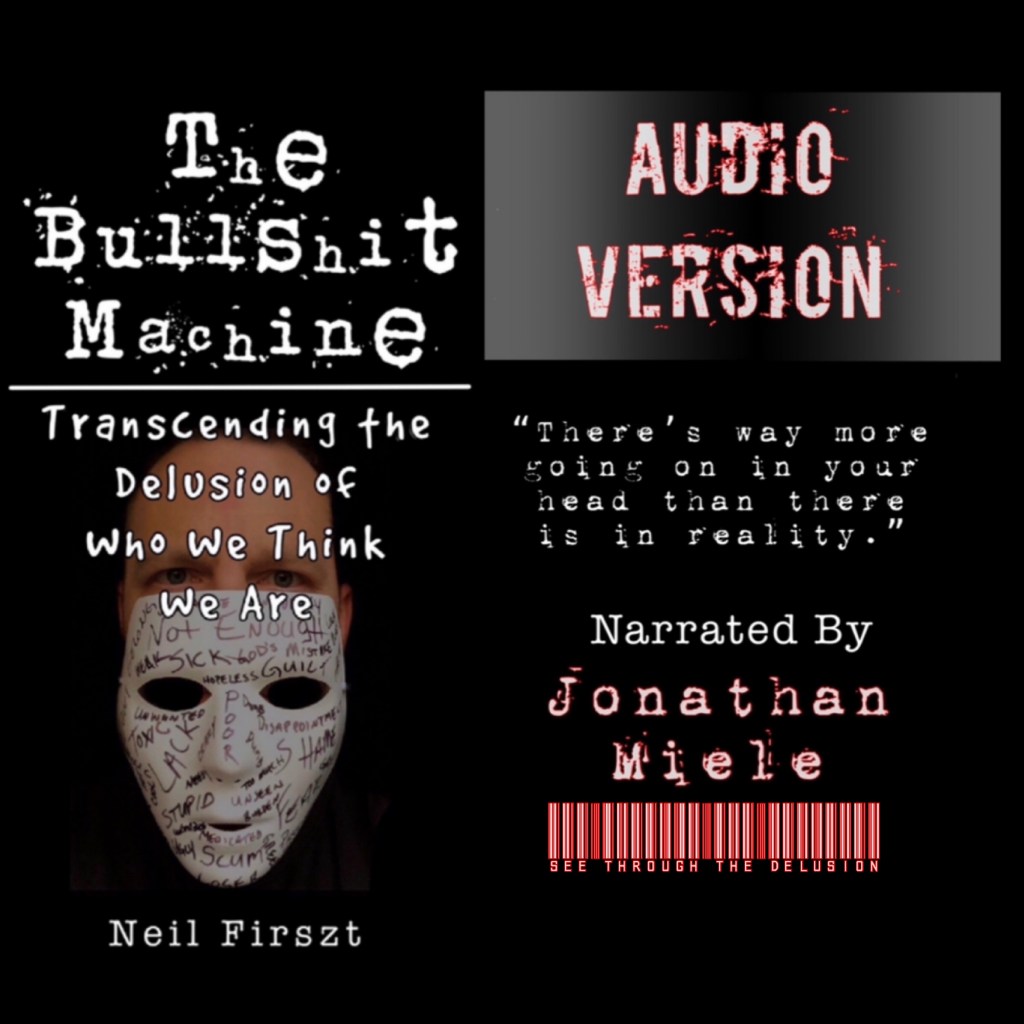




 The Bullshit Machine
Leave a comment