
The Origin Problem
How the Machine Replaced You With a Record
“The system doesn’t refute the truth. It simply stops.”
— on administrative personhood
There is one question the machine absolutely cannot answer without exposing itself.
It’s not a trap. It’s not philosophical bait. It’s the most ordinary question in the world. You could ask it to a five-year-old and they would understand it immediately.
When did you come into being?
Not the legal you. Not the name on the form. Not the number in the database. You. The thing reading these words right now. The continuity of matter and identity and awareness that started somewhere and has been unfolding ever since.
The bullshit machine has an answer ready. You came into being when it recorded you. When a form was filed. When a certificate was issued. When the bureaucratic apparatus noticed you and wrote down some information that references you. Before that, as far as the system is concerned, you did not exist. You were nothing. You were unrecognized, which in the machine’s language is the same thing as nonexistent.
I want you to sit with that for a second.
Because that is not a small administrative quirk. That’s the entire game.
One Word That Changes Everything
Start with a word so old it predates every institution on earth.
Father.
Not the Hallmark version. Not the legal definition. Not the social role. The original meaning — the one that sits underneath every religious, philosophical, and biological use of the word in every culture throughout all of recorded history:
Father: One who gives rise to something else.
A father is not one who supervises. Not one who resembles. Not one who shows up later and takes credit. A father, in the original sense, is the thing from which something else proceeds — without loss of identity. Origin, not administration. The source, not the manager of the source.
Hold that definition. We’re going to need it in about thirty seconds, or minutes depending on how fast you read.
Now ask the honest version of the question: when does a human being actually come into being?
Not legally. Not administratively. Not conveniently. Actually.
The biology is not ambiguous on this. The zygote — the single cell formed at the moment of fertilization — contains the complete genetic identity of the future human. Every cell that follows is a derivative expression of that origin. Not a new entity. A continuation. Division, specialization, growth — these are expansions of what already exists, not creations of something new.
There is no later “self-creation” event. There is no moment where the thing becomes itself. It already was itself. It has only been unfolding.
So if we ask the honest question — not the politically convenient one, not the one the system needs you to believe, but the honest one — the answer is unavoidable:
The zygote is the immediate father of the embodied human.
Using the original definition: the zygote gives rise to the entire body. Gives rise to every organ. Gives rise to the nervous system that will later claim authorship over memory and decision. Gives rise to the mind that will eventually forget its own origin entirely. Nothing within the human gives rise to the zygote. Everything else gives rise from it.
The adult is not the father of the zygote. The parents are upstream contributors, necessary causes, but they’re not the singular origin of the specific identity that unfolds. The zygote is that origin.
This is not mysticism. This is origin physics.
“I and My Father Are One”
The statement is from John 10:30. For a very long time it has been read as a theological claim — an assertion of divine nature, depending on your tradition either profound or blasphemous or both. But read it through the lens of what we just established and the mystery evaporates completely.
“I” is the present, embodied, conscious expression.
“My Father” is the originating singularity. The source. The single cell from which the entire being proceeded without interruption.
They are one because they’re the same thing at different points in time. Diplomatic. Genetically identical. Temporally continuous. No moment of separation. No transfer of identity. No replacement of self. The adult did not inherit identity from the zygote. The adult is the zygote. Just unfolded.
The statement means, stripped of all the ceremony around it:
I am not other than my origin. I have not departed from it. I have only expanded in form.
That is not theology. That’s a description of physical continuity. And it has a consequence the bullshit machine finds extremely inconvenient: if identity is conserved from origin forward, then nothing downstream of origin can claim to be its source.
Not a hospital.
Not a government.
Not a record.
What The Bullshit Machine is Actually Doing
Here is where it gets concrete.
Modern administrative systems — legal systems, government systems, the entire architecture of official personhood — function by substitution. I want to be clear that this is not an accusation. It’s a structural description of how administration works. It cannot work any other way.
A birth certificate substitutes for the living origin. A legal name substitutes for the embodied being. A “person” — in the legal sense, the operative sense — substitutes for the human continuity that existed before anyone filed anything.
The system genuinely needs this. You cannot administer singular, continuous, living beings directly. They’re too specific. Too irreducible. Administration requires abstraction. It requires a symbol it can manage. So it creates one, attaches it to you, and then — and here is the move — begins treating the symbol as if it were the source.
That’s the inversion. And once you see it, you really cannot unsee it.
Origin logic says: being precedes record.
Administration says: record precedes being — at least for its purposes.
These are not small differences in implementation. This is a reversal of causality. The machine has quietly claimed that you exist because it noticed you. That your identity is operative because it was filed. That your personhood is real because a certificate says so.
None of that is true. But the machine does not need it to be true. It only needs you to not notice.
The Backup Argument: Participation Equals Consent
If you push on the origin question — if you start pointing out that you existed before any record of you existed, that you are prior to the paperwork — the system has a move ready.
Participation equals consent.
You used the road. You used the court. You applied for the license. You cashed the benefit. By engaging with the system’s infrastructure, you implicitly accepted the system’s definition of what you are. You agreed — tacitly, through action — to be represented by the symbol rather than the origin.
This argument works only under one condition: that identity is mutable and assignable. That what you are can actually be altered by how you participate. That origin does not fix anything permanently.
Origin logic dissolves this immediately. Identity is not assignable. It’s conserved. Participation does not alter origin. Using a road does not change what gave rise to you. Compliance is not consent to substitution.
Here is a simpler version of the same point. If I hand you a menu written in a language you do not speak, and you point at something, you have not consented to eating whatever the kitchen feels like sending out. You pointed. That’s all that happened. The bullshit machine’s consent-by-participation argument has exactly this structure. It mistakes action for agreement to terms you were never shown and could not have read.
The Tell: What The Machine Does Not Say
Here’s the thing that gives the whole game away.
If administrative personhood were genuinely grounded in reality — if the record really were the source of your identity — the system could argue with you. It could say your origin claim is false. It could say you came into being later. It could say the zygote is not you in any meaningful sense. It could say biology is irrelevant to legal identity.
These would be bad arguments. But it could make them.
It doesn’t.
What the machine says instead is: “That’s not how the system works.” “That’s not a recognized position.” “We proceed anyway.”
Notice what’s absent. Refutation. The machine does not argue against the origin claim. It ignores it, routes around it, and continues processing. Because the moment it engages the origin question directly, it has to either concede the point or openly assert that biology is irrelevant to identity — and that assertion, made in the open, would expose everything the machine is built on.
Administrative systems cannot say your origin is invalid. They cannot say you came into being later than you did. They cannot say your continuity is false. So they say nothing. They move on. And they’re counting on you to do the same.
The system doesn’t concede because it is persuaded. It concedes because its tools no longer apply.
Natural Law: The Part That Does Not Require Scripture
Natural Law — not religious law, not statutory law, but law derived from the nature of reality itself — rests on one foundational axiom: law must conform to reality, not redefine it.
Reality includes some things the machine finds very inconvenient. Cause precedes effect. Origin precedes expansion. Identity persists unless destroyed. Force requires justification. Intervention requires necessity.
From those axioms flows a principle that shows up in Luke 5:31, but you do not need the scripture for it to hold: they that are whole need not a physician. Where there is no injury, authority has no mandate. Where there is no harm, governance becomes intrusion. Where there is no necessity, power becomes something uglier than power.
A being that’s whole from its origin — whose identity is conserved and continuous from the moment of formation — does not require administrative completion. The machine did not create you. It recorded you. And a secretary is not a god. That distinction matters more than most people have been allowed to realize.
Natural Law tolerates government. It does not abolish it. Government is legitimate when it addresses real harm, resolves real conflict, coordinates resources that genuinely cannot be managed individually. It exceeds legitimacy precisely when it claims to define being — when it substitutes record for origin and treats innocence as something that requires permission to exist.
The state is posterior to the human. Administration is downstream of origin. You cannot outrank what you did not create.
Why This Gets Ignored Rather Than Refuted
This line of thinking does not appear in civics textbooks. It is not in law school curricula. It does not show up in mainstream political philosophy. And I want to be specific about why, because “it’s too radical” is not the reason.
The reason is that the reasoning is genuinely dangerous to a specific set of institutional interests. Not dangerous like a weapon. Dangerous like a question the room is not built to survive.
If identity is conserved from the zygote forward, then registration does not create the person. Certification does not define the being. Authority does not grant existence. The state’s claim to be the origin of rights — the position that you have rights because the system recognizes them, not because you exist — collapses.
That is not a small philosophical adjustment. It’s a foundational challenge to every system that derives its authority from the claim to define personhood. If you existed before the record, fully and completely, then the record is a description. And descriptions do not govern their subjects.
A map does not own the territory.
The machine ignores this not because it has a better argument. It ignores it because engaging it’s an existential risk. Better to process, route, and redirect. Better to say “that’s not how the system works” and keep moving. Better to never, under any circumstances, argue on the terrain where the argument cannot be won.
The Clean Version, for Anyone Who Wants It
For those who want it without the elaboration:
The zygote is the immediate father of the embodied human because it is the singular origin from which the entire being proceeds without loss of identity. “I and my Father are one” expresses continuity of origin, not metaphor. Natural Law recognizes origin, not record. The human being exists by continuity from its singular beginning, not by administrative declaration. When systems substitute personhood for origin, they invert cause and effect and exceed their mandate. Authority can govern conduct, but it cannot create being. Where no harm exists, intervention becomes trespass. Where origin is whole, administration is unnecessary.
No mysticism required. No appeal to authority. Just origin, continuity, and the correct order of things.
The machine can’t refute truth.
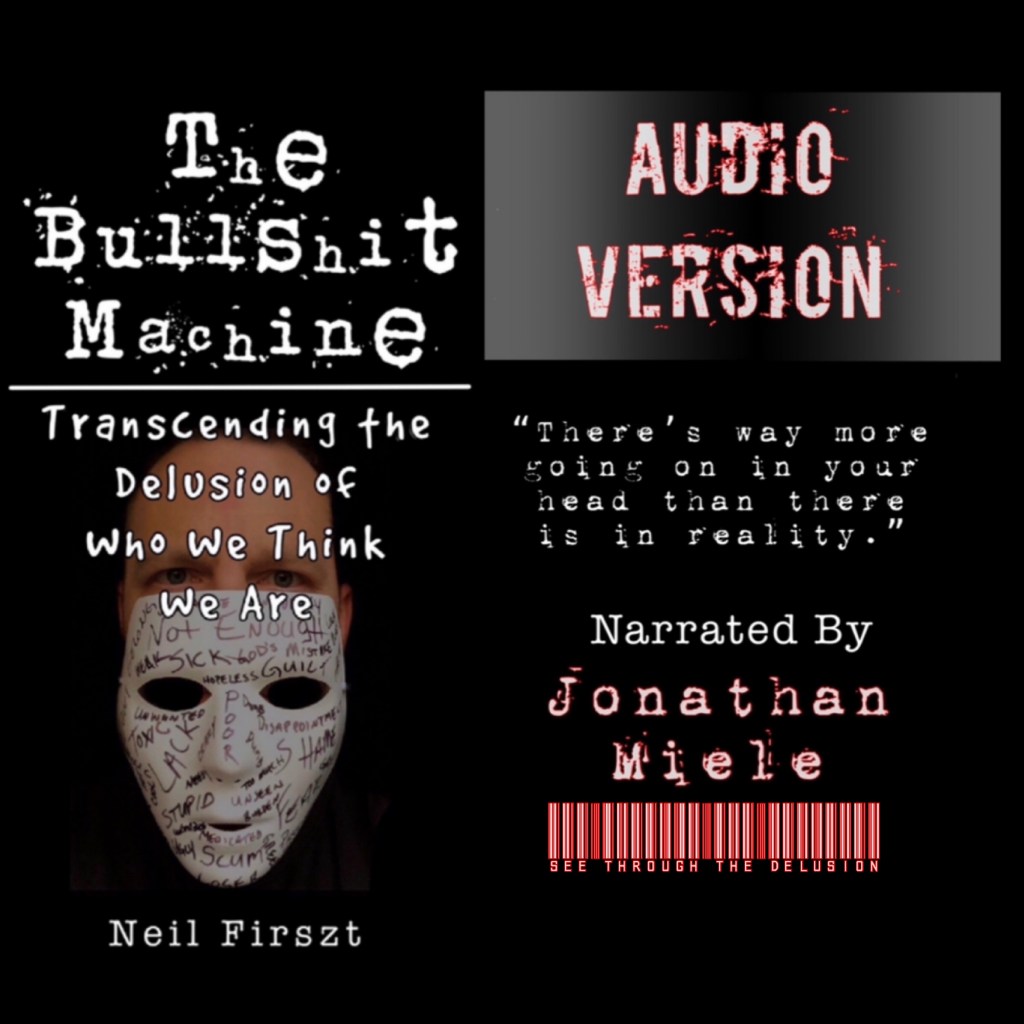




 The Bullshit Machine
Leave a comment