Are facts and truth the same thing? Maybe. Sometimes. “What do you mean?” you ask. “Then why when I google the definition it says “fact. noun. 1. : something that has actual existence : a matter of objective reality?” And why does Black’s Law dictionary say facts are, “A circumstance, event or occurrence as it actually takes or took place; a physical object or appearance, as it actually exists or existed. An actual and absolute reality, as distinguished from mere supposition or opinion; a truth, as distinguished from fiction or error.”, you say with incredible coherency and accuracy from memory, off the top of your head, like you say those definitions every day. That might be because the definition, not the meaning, for the word “facts”, was made up by the system that provides the “facts” in the legal fiction we all live in, or the simulation if you will. In the world where you provide the facts, you want to own the definition for the word facts so you can make sure that facts mean absolute truth because you make up the facts. I can see how this can be confusing, so I’ll do my best to explain, but this is not legal advice nor is it a fact, but it’s also not fiction. It is my observation of what I call the bullshit machine or what you might know as the matrix. It is the system we use to do commerce, keep order, and try and bring fairness to our interactions, and the more I dive into it, the more I see it has to be this way, but I think it can be healthier if we know how it works. We have a good system that is being heavily manipulated and overused, which causes more manipulation. This is not “the truth”, though there is truth in it. Many perspectives exist and should be used to observe our reality. Using only one perspective to look at the world is madness. I hope you enjoy this breakdown.
The truth is always the truth and therefore also always a fact. A fact is a detail of a story that makes the story move forward in whatever direction the storyteller wants to take it, so facts are always true to the story, but what if the story is a fictional story? The fact is that Harry Potter has a scar on his forehead, right? You’ve seen the movies, read the books, played the video games, and if you haven’t, you’ve at least seen billboards, commercials, comedy skits, or pictures and advertisements on the internet that have been in front of everyone’s face during the times the movies were playing in theaters, so I can be pretty confident that its largely common knowledge that Harry Potter has a scar on his forehead. It’s also a fact that he wears glasses and that he goes to Hogwarts and a million other facts that you may or may not know about, but what’s the truth? The truth is that Harry Potter doesn’t exist outside of our imagination because he is a fictional character, and that all the facts about Harry Potter were made up by the author.
Do you know the definition for the term “legal fiction?” No? You can’t rifle this one off like you did with “facts”? One trick pony, eh? Okay, I got your back on this one. I am the one writing after all.
“le·gal fic·tion/ˈlēɡəl ˌfikSHən/noun: an assertion accepted as true, though probably fictitious, to achieve a particular goal in a legal matter.
“one must remember that land ownership is ultimately simply a legal fiction”
I thought it would be better to have the definition of “legal fiction” fresh in our minds as we break down the word “facts”, which we’re going to do right now, and then we’ll get into examples of “legal fictions”, and a new perspective should start to open up.
A quick internet search for the definition gives me this copy and paste from dictionary.com, “What is the best definition of fact?- an event or thing known to have happened or existed. a truth verifiable from experience or observation. a piece of information.” Does anyone have a problem with this definition? Probably not, because that’s the way most people use it, or at least think they’re using it most of the time and there is nothing wrong with this definition, but was this always the definition? Also, now that you can see from the perspective that many facts can be facts about fictional stories, does that change what you hear when someone is screeching about the “FACTS!” they’re using to sway your opinion? Also notice that “a piece of information” is part of the definition which to me implies that a fact is simply a detail of a story told that only has to be true to the story. One last also. Also, what is “experience” to your subconscious? Could experience mean something you learned on TV that is now a subconscious belief? What truth are you verifying?
As time goes on, the definitions of words can change, or “evolve”, so I like to look up the history or etymology of a word to see how it has been used over the years and to see if they mean what they’re defined as. From etymonline.com: fact (n.) 1530s, “action, a thing performed, anything done, a deed,” good or evil but in 16c.-17c. commonly “evil deed, crime;” from Latin factum “an event, occurrence, deed, achievement,” in Medieval Latin also “state, condition, circumstance” (source also of Old French fait, Spanish hecho, Italian fatto), etymologically “a thing done,” noun use of neuter of factus, past participle of facere “to do” (from PIE root *dhe- “to set, put”).
Uh oh. Looks like there’s a huge difference in the meaning of the word and how it has been used throughout the years versus the current definition. Fact might be one of those “magic words” that has a common definition but is often used in other ways. Is there a lingering inherent meaning to the word that contradicts the “definition”? Let’s look at the root, which is -fac-, [root.] -fac- comes from Latin, where it has the meaning “do; make.” This meaning is found in such words as: benefactor, de facto, facsimile, fact, faction, faculty, manufacture. See -fec-, -fic-. And for good measure, I looked up the root word “fic” which is the root word for “fiction” and found this: -fic-, root. -fic- comes from Latin, where it has the meaning “make, do.” It is related to -fac- and -fec-. This meaning is found in such words as: beneficial, certificate, fiction, honorific, horrific, pacific, prolific.
So, “fac” and “fic’ have the same meaning of “do, make”/” make, do”, which makes sense in the original definition of “fact” as “action, a thing performed, anything done, a deed,” but fact and fiction don’t mean the same thing. That’s odd. Could fact be short for something? What about fiction and faction? The definition of “fiction” is something invented by the imagination or feigned; specifically: an invented story, according to Merriam-Webster, a “faction”, which has the same etymology as “fact” coming from the Latin word “facere” which means “anything done”, and also contains the root word “fac”, has a couple of definitions. The first definition states that a faction is, “an organized group of people within a larger group, which opposes some of the ideas of the larger group and fights for its own ideas.” Its own “facts”, maybe?
The other definition for faction is “a term in literature used to describe a narrative that blends facts and fiction in a way that’s seamless. The word is a portmanteau of “fact” and “fiction”, and the term is often used in a pejorative way. Faction can involve using dramatic license, such as imagined conversations, to tell a story based on real events. Writers can use faction to create stories that challenge, inform, and entertain readers.” (AI overview on Google) And oxfordreference.com says, “A portmanteau term (fact + fiction). Typically pejorative, it refers to a form of narrative based on real events but employing dramatic licence (for instance through the use of imagined conversations)”.
I won’t leave you hanging on the term, “portmanteau” either. It means, “A case or bag for carrying clothing and other belongings when travelling; (originally) one of a form suitable for carrying on horseback; (now esp.) one in the form of a stiff leather case hinged at the back to open into two equal parts.” You can also use the other definition, A portmanteau (pronounced port-MAN-toe) is a word made by blending at least two words.” But I don’t see how that particular definition would be relevant here… I’m obviously joking… Or am I? Yes, obviously… But am I really joking? Yes, because it’s the most relevant of all the definitions and I said the opposite thing to hopefully make you laugh. Did it work? Did you get the joke before I went and ruined it by typing the words I’m typing now?
One last thing about “fact” because I like to think for myself. If I combine the meaning of the root of the word “fac”, “do, make”, with the current definition, “an event or thing known to have happened or existed. a truth verifiable from experience or observation. a piece of information.”, I get “do or make an event or thing known to have happened or existed, do or make a truth verifiable from experience or observation, do or make a piece of information”, and that means that I would be creating a reality and the facts about the reality I created. I also just perfectly described a “psyop”, short for “psychological operation”, which are allegedly used by governments and media to get people to react and take action by heightening their emotions and making them think action is necessary. So, if they’re making the events that create the facts, then technically nobody is ever really lying to you in the fiction, even if the act itself was fiction, it still contains facts, and you’re just participating in the world theater but probably don’t know it. Let’s take a look at some examples of what a legal fiction is.

What are some examples of a legal fiction, are the words you just read. Great question, even though the previous sentence doesn’t have a question mark. A corporation is an example of a legal fiction. It’s a bunch of people playing different roles, getting paid with paper money, to create an outcome which is usually growth, expansion and higher profits, while following the “facts” and “rules” made up or authored by a group of people acting on the behalf of the corporation who is the authority. It’s like a little society with a hierarchy that worships the corporation’s name and makes up its own rules, which can lead to some odd facts. The fact can be that you’re a 50-year-old man with 20 years of high-level experience in your business, and some fresh-faced fruitcake right out of college gets the manager job you are far more experientially qualified for and becomes your superior. Fact. The kid is your boss and you better not be late, slacker. Don’t feel too bad though, corporations kinda have a similar life cycle to the mainstream narrative of stars. Constant growth and expansion until it goes super nova and implodes on itself creating a black hole. At least you get to keep your soul.
Your name and birthday are legal fictions. We function in the system with what is sometimes called our “strawman”, who is a corporate legal fiction with no natural rights. Until you’re responsible enough to learn that you have rights, know what they are and how to use them, you give up your natural rights for the benefits and privileges that the legal fiction offers, like a driver’s license, social security, car loans, etc. You can move through the system, borrow money, go to college, get a job, travel, use its services. You build your whole life and it’s great, but in the legal fiction, you generally follow the authority’s rules, ask permission to do things, and live by the facts they give you. You follow the hierarchy, allowing people to make certain decisions for you, tell you not to drive too fast, tell you when it’s not safe to go outside, give you guidelines to build a business or home, tell you what amount of poison is allowed in your food, etc., and it can be a great life, but we live by facts that may not be true to us, or even really matter in our lives. We just pretend it does. There is nothing wrong with living in the system, obviously, because we all are, but it’s good to know that it is better to function in it like nobody is obligated to tell you the truth. That doesn’t mean everyone is lying either, it means nobody is obligated to tell you the truth. There’s a big difference in victim consciousness in those two perspectives.
The legal system is a corporate fiction. Same thing. People playing different roles with a predetermined hierarchy and a lot of made-up authority. There are generally a lot of facts made up in this fiction from court case results tried from the laws, codes, and statutes made up by the next legal fiction. Now, when I say made up, I’m not negating the fact that things are not agreed upon by more than one person, or that a lot of time and effort doesn’t go into getting the facts right or straight, I’m saying that the facts in the fiction are determined by something other than truth in many cases, and can still be considered facts and not be a lie. Law.Cornell.Edu describes a legal fiction as “an assumption and acceptance of something as fact by a court, although it may not be true, to allow a rule to operate or be applied in a manner that differs from its original purpose while leaving the letter of the law unchanged.”
Government (govern mentality) is also a legal fiction. Who’s the biggest authority (author), that makes up more facts that people believe are true in their lives than the government? And if the people in the government are authoring the facts, is anyone in the government ever really lying to anyone, or are they agreeing on what the facts are so they can move their legal matters forward, and giving you those facts? In the fiction, those facts are facts because those facts are agreed upon by the government employees that the people allegedly elect. Our consent to those facts allows them to function as true facts until someone challenges the facts and successfully gets the facts changed. Deep breath.
Think about the process of voting that people go through to “elect” people to make the rules for them to live by. You’ve got billions of dollars spent on advertising, campaigning, debates, promises, excitement, rhetoric, side taking, drama, shit talking, polling, and more, which brings upon lots of consent and a much bigger agreement that the facts the elected people make up, are true in the fiction. A small group of people has the support and trust of a much, much larger group of people, and the small group of people can make up facts based on the support they have and get an instant agreement on facts and even more support, and the bullshit machine chugs along.
Like in 1969 when so many people “witnessed” Richard Nixon on a landline telephone, talking to Neil Armstrong who just took the first steps ever on the moon by a man, recorded by Tyrone Shoelaces who never got credit for any of his wonderful camera work. A huge production went into making it a fact that the United States put the first ever man on the moon, and they were undeniably successful. I wasn’t alive yet, but if I put myself there, watching that on TV, I could feel squirts of the adrenaline I would have had knowing that I live in the fucking greatest country in the fucking universe, and we just put a fucking man on the fucking moon! WOOOOO HOOOOO! FUCK YEAH! [Hip thrust] [Repeat hip thrust] [One more time] Yes! Oops. Sorry. I just had a huge rush of good ‘ole American patriotism provided by NASA. Fuck yeah! Gotta wipe my nose.
A massive amount of people, full of pride and patriotism saw it on TV and all convinced each other that it happened, and it became an instant agreed upon, celebrated fact, so if it was a fact that we went to the moon, how crazy can the facts get? Think about how important putting a television in everyone’s home was. Sure, you can get some people to believe what they read, and even more people to believe what they hear, but how many people can you get to believe what they see, even if it is on a screen? How big is the Hollywood movie industry? Nobody makes fiction look real like Hollywood. Making the things on our screens look more real might not be necessarily for our entertainment. They’re also the biggest producers of “faction” in the world. I bet most of the facts you know about many historical events, come from the Hollywood movies you’ve seen. I know many of mine have, but since I don’t identify with the information, I can learn other versions of what I think I know and not freak out.
The TV is a multi-tool weapon that we are all happy to put in our homes as our altars, then invite the strangers on it, inside, for some free and easy degenerate programming for our minds. “Welcome to my living room Pee Wee Herman. Please, teach the kids whatever you like. Us parents will be in and out, doing other things. Whatever you tell them is okay. Oh! And please take some 2–4-minute breaks throughout the program, so they can watch some high-level marketing and advertising while you’re educating them. Thanks! Send in Bill Nye when you’re done, please. The kids aren’t up to date on all their science facts”. I remember being a kid sitting on the carpet, in front of the TV thinking, “I wonder if this is where my thoughts come from. What if there was no TV? What would I be doing then? Would I think the same thoughts?” But since I was sitting in front of the TV, the programming would take back over, and those thoughts would be consumed by the intense drama of the Smurfs.
The TV serves as a mighty programmer for the legal fiction, because it can make people see things and believe them, especially if you’re relaxed and under the impression that you’re being entertained. TV and movies are also a way better idol makers than radio or print, and idols are the bright light that blinds people from seeing the truth. From mindless nonsense, to continuously programming who your authority is, to teaching you how to act socially, to showing how to treat different groups of people, to giving 24/7 doses of fear and contradiction with the news, to giving you and the kids facts about the fiction, like with science and history channels, to influencing your love for material possessions, to diagnosing your medical conditions, to telling to wear a mask, and even telling you not to go outside, the TV is boss, and now we all have one in our pocket, so we don’t miss a minute of the fiction. That thing in our pockets isn’t just a little TV though. It’s a powerful social media machine that lets you post any opinion, meme, video, or blog about all the 2nd, 3rd, and 4th hand information that you have no idea is true, but it made you emotional so now everybody you know has to know about it, and all while you’re consuming everyone else’s highly emotional responses. Let’s take a look at how people help to brainwash each other with information given to them by the legal fiction in the next sentence, while we wonder why this sentence was necessary.
Social media has become a powerful tool for shaping public opinion, often reflecting and reinforcing the narratives created by the “legal fiction” or “bullshit machine.” Echo chambers and confirmation bias are not your friend in the legal fiction. Social media algorithms are designed to show users content that aligns with their existing beliefs and preferences. This creates echo chambers, where people are exposed primarily to viewpoints that reinforce their emotional reactions. When users see the same information repeated by multiple sources within their social circle, it can strengthen their belief in that information, even if it’s misleading or false. Fearful and misleading information can spread rapidly on social media, which can blind people and make them forget what they know to be true and simply react to the emotional charge they get from the information. People are more likely to share sensational or emotionally charged content, which can lead to the widespread acceptance of narratives that are not grounded in truth or fact. Once information goes viral, it becomes part of the collective narrative, regardless of its accuracy, and the ones with the most influence over information seem to be abusing their privilege to be distributors of it. The “Misinformation” the system fights against isn’t dangerous because it’s dangerous information, it’s dangerous because it goes against a narrative that is being used for behavior control.
Content that elicits strong emotional responses, such as fear, anger, or sympathy, is more likely to be shared and believed. These emotional appeals have the ability to override critical thinking and lead people to accept and propagate the underlying narrative, even if it’s based on distorted or selective information. Organizations or governments can also sometimes create fake social media accounts (bots) or orchestrate coordinated efforts (astroturfing) to make a particular viewpoint appear more popular or accepted than it actually is. This manufactured consensus can make it seem like there’s widespread agreement on a particular narrative, influencing others to adopt the same beliefs and even take some sort of humiliating action. Influencers and figures of authority on social media become idols, and can sway public opinion by endorsing particular narratives. When a trusted figure shares information, their followers are more likely to accept it without questioning its validity. This trust can be exploited to propagate the narratives of the “bullshit machine.”
Platforms allow users to curate their own information environment. People can choose to follow sources that align with their beliefs and ignore those that don’t, and all with the help of bots and influencers. This selective exposure leads to a one-sided view of issues, where the framing of information is controlled to fit the desired narrative. Over time, this reinforces the legal fiction that’s being pushed. Social media can exacerbate polarization by highlighting and amplifying divisive issues. When users see others in their network strongly opposing certain narratives, it can reinforce an “us vs. them”, “red vs. blue”, “black vs. white”, “rich vs. poor” mentality. This division makes it easier to manipulate people by framing narratives as a battle between good and evil or right and wrong.
The craziest part is that nobody really knows if the facts that they, themselves are using to justify their behavior are true. People are taking 3rd, 4th, 5th, 6th hand information provided by corporate legal fictions and using it to hate, fight, argue, demean, gas light, ad hominem, judge, assume, scream at, and kick people out of families because they’ve identified with the emotional charges that the information triggered. Emotionally charged information is used as an excuse for bad behavior and then the government uses your bad behavior as an excuse to take more of your freedoms away, and rightfully so. So if you’re screaming at someone because of what you saw on Fox News or CNN, it’s pretty obvious that you can’t handle information given to you by the legal fiction, and your freedoms need to be less, and you also ruin it for other people. This is why these management systems exist, to help manage you through the system, and they’re profitable.
“So what’s the solution, Neil?” There is nothing that needs to be solved. Know what it is, don’t use what you don’t need, and consider your dislike for using the parts you do need as a part of life, and deal with it. Do you have to identify with a political party, your sexuality, or any of the identifications it gives you? Do you need to be on a team? Can you teach your kids how to interact with it better than you were taught? Do you need its input coming out of every screen and speaker you own all the time? Do you need the system to decide on things like how you parent and school your children, or when you are sick or well? Answers these questions, come up with some more that fit your life, and there, you will hopefully find your solutions, and you won’t have to follow mine and possibly be disappointed. Just remember, that there’s nothing wrong with the legal fiction, it’s great. You just need to learn how it operates, so you can operate in it effectively and not identify with the identities it tries to give you.
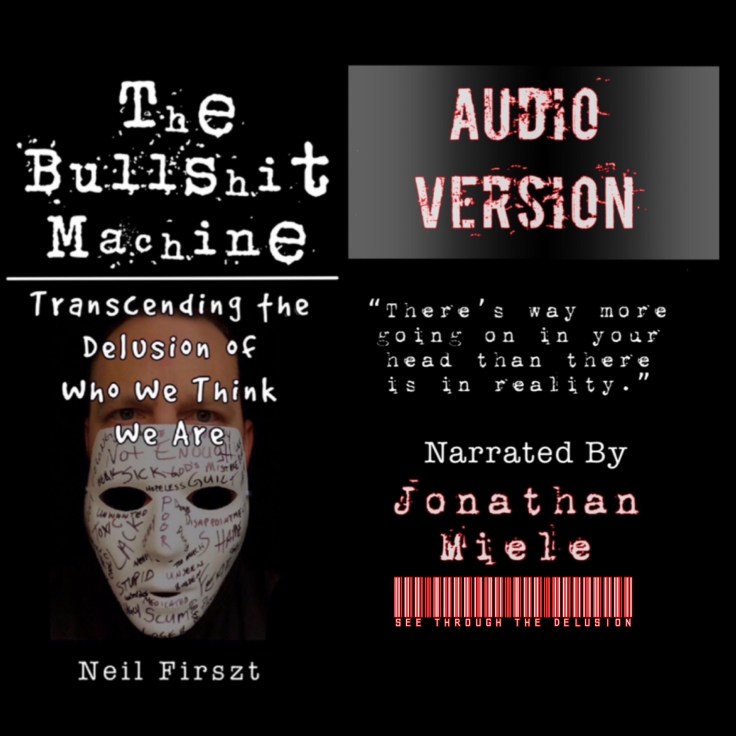



 The Bullshit Machine
I heard your letter on Owen’s stream.
I enjoyed the post.
卐bear
LikeLiked by 1 person