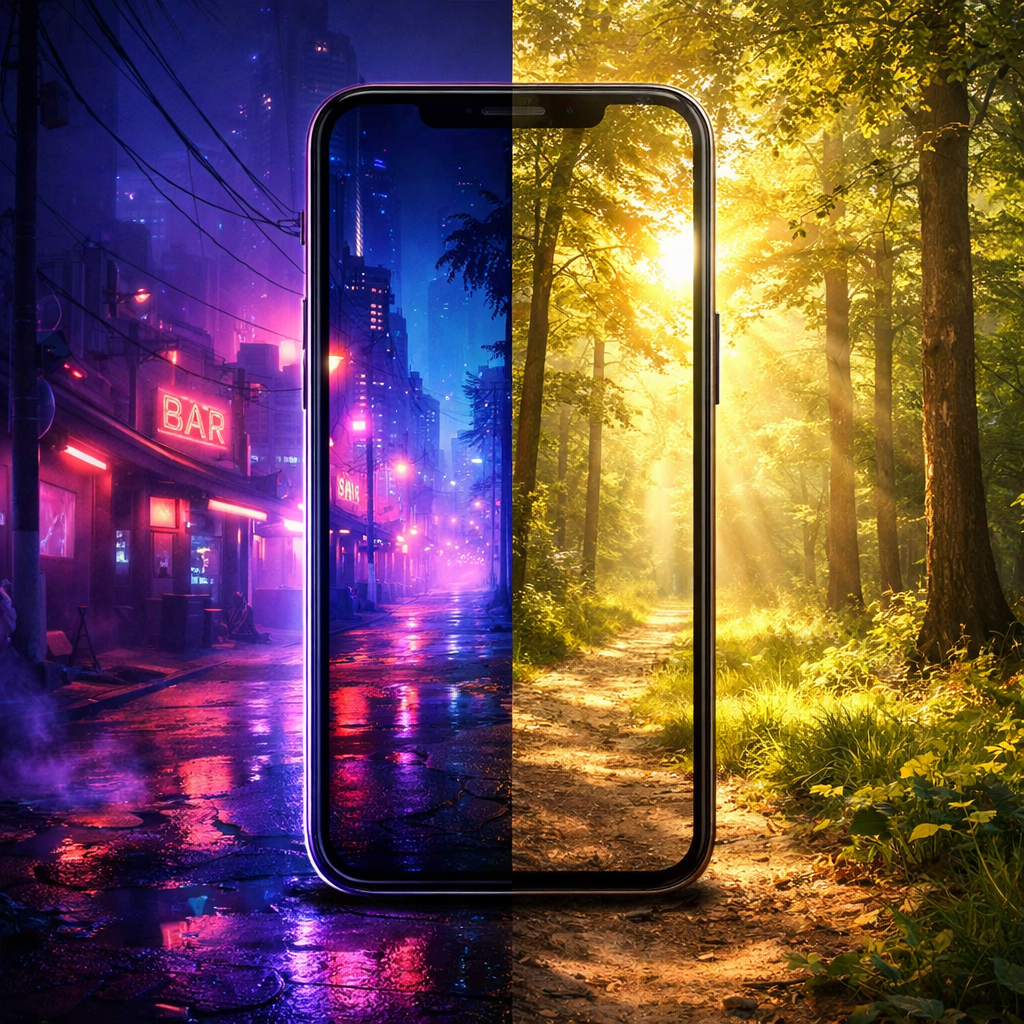
On the boundary of the conceivable, the attention that builds reality, what’s in your feed right now, and how to move your own window deliberately.
The Window
The Overton window is usually described as a political concept — the range of ideas acceptable for public discussion at any given moment. Policies outside the window don’t get debated. They get dismissed. Not because they’re wrong necessarily, but because the window hasn’t moved far enough to make them conceivable as serious options.
But the window isn’t only political. It applies to imagination itself. To what the mind can reach toward. To what feels possible versus what feels like fantasy. And that window doesn’t move through logic or argument or willpower. It moves through imagery. Through what gets put in front of the mind often enough, vividly enough, with enough authority, that the mind begins to accept it as the landscape of the possible.
The person in the horse and buggy era was not less capable than the person who conceived Google. There is every reason to believe that raw human intelligence has not changed meaningfully across generations. What changed was the window. The horse and buggy person had no pathway from their available imagery to anything resembling a global information network. Not because the thought was beyond them. Because the thought requires a sequence — this thought leads to that thought leads to this thought — and the imagery of their era didn’t supply the sequence. You don’t go from horse and buggy to Google in one leap. You go through electricity, through telephony, through computing, through networks, through each step being made conceivable by the imagery of the step before it.
Intelligence is raw capacity. Smarts is what the window allows you to do with it. The Google guy isn’t a better thinker than the horse and buggy person. He’s standing inside a window that accumulated two centuries of imagery before he arrived, and that window handed him concepts the horse and buggy person couldn’t have reached from where they were standing no matter how hard they thought.
“Intelligence is raw capacity. Smarts is what the window allows you to do with it.”
The window is everything. And the window moves through imagery. Which means whoever supplies the imagery moves the window. And whoever moves the window determines what the next generation can conceive. Not what they’re told to think. What they’re capable of thinking at all.
The People Who Were Suspicious of Photographs
There are accounts throughout history of people who resisted having their image captured. Who were uncomfortable with photographs. Who felt something was wrong with the idea of the image even when they couldn’t articulate what. Indigenous communities, rural populations in the early days of photography, individuals across many cultures who reacted to the camera with a wariness that the modern world has largely filed under superstition and moved on from.
They weren’t superstitious. They were correct.
What they understood, at the level of instinct rather than vocabulary, is that an image is a claim. That the image and the thing are not the same. That once the image exists it can travel without you, be used without your knowledge, be interpreted without your context, and be installed in other minds as a version of you that you never agreed to. They understood that something real gets lost in the translation from experience to image. And they were unwilling to participate in that loss without at least registering that the loss was happening.
We lost that instinct. Not by accident. The era of image proliferation required us to lose it. You cannot sell a billion photographs, a billion television sets, a billion phones, to people who maintain a healthy suspicion of images. The suspicion had to go. And it went — gradually, generationally, through the steady normalization of images as reality rather than representations of reality, until the current moment where most people cannot feel the difference between an experience and a vivid depiction of one.
“They understood that an image is a claim. That once the image exists it can travel without you, be used without your knowledge, be installed in other minds as a version of you that you never agreed to.”
That lost instinct was not nothing. It was a form of epistemic self-defense that took thousands of years to develop and about a hundred years to dismantle. And in its absence we accepted something in exchange that we didn’t consciously choose — the total colonization of the imagination by images we didn’t generate, installed as knowledge we didn’t earn, moving a window we didn’t know was moving.
The Loop Nobody Talks About
Here is the part that gets left out of every conversation about media influence, about propaganda, about the effect of imagery on the mind. The part that is more interesting and more consequential than any of the manipulation narratives.
The image preceded the reality it made possible.
Think about the kid in some far-off country who heard about the moon landing years after it was presented to the world. Whatever the precise nature of that mission, what matters for this purpose is what the image did to his window. A human being left the Earth. Stood on another world. Came back. That image — delivered through whatever rectangle was available to him, secondhand, years removed from the event — exploded the boundary of the conceivable. Things that required that expansion to even be imaginable became reachable. Not because he was told to reach for them. Because the window moved and his mind, like all minds, naturally reached toward what was now inside it. Now imagine what it did for the United States.
That is not manipulation. That is the mechanic of human progress operating exactly as it always has. Every technology that exists was conceived inside a window that earlier imagery moved. The people who built the internet were standing inside a window that science fiction writers moved. The people who built the smartphone were standing inside a window that computing pioneers moved. The people building artificial intelligence today are standing inside a window that decades of accumulated imagery moved to the point where the thing became not just conceivable but inevitable-feeling.
The tech we have today didn’t exist because nobody needed it. Nobody needed it because nobody could conceive it. The need and the technology arrived together, both of them downstream of imagery that moved the window first. You don’t need something you can’t imagine. Once you can imagine it the need appears as if it was always there. And then the thing gets built because human minds, once they can conceive something, reach toward it naturally and persistently until it exists.
“The image preceded the reality it made possible. You don’t need something you can’t imagine. Once you can imagine it the need appears as if it was always there.”
The image is not describing reality. The image is recruiting the attention that will build the next version of it. That is the loop. And it has been running since the first person described fire to someone who had never seen it and watched their eyes change.
Attention Is the Raw Material
None of what exists in the modern world exists without human attention feeding it. Not the iPhone. Not artificial intelligence. Not the internet. Not any of it. These things required not just engineering but the sustained collective attention of millions of people imagining, desiring, reaching toward something the window had made conceivable. Engineering is how you build the thing. Attention is what calls it into existence in the first place.
This is not mysticism. This is the plain mechanics of how every technology ever built actually happened. Someone had an image. The image attracted attention. The attention generated effort. The effort produced a prototype. The prototype became an image that attracted more attention. The loop runs until the thing exists. And then the thing becomes imagery that moves the window further and the loop starts again.
Which means whoever moves the window first gets to aim the attention of millions. Not through force. Not through argument. Through the simple mechanics of what the human mind reaches toward when it can conceive of something it couldn’t conceive of before. Put the image in front of enough minds, make it vivid enough, repeat it enough, and the attention follows automatically. And the attention builds the thing.
“Your attention is the raw material. It has always been the raw material. And it has been recruited, largely without your knowledge, toward realities someone else imagined first.”
Your attention is the raw material. It has always been the raw material. And it has been recruited, largely without your knowledge, toward the realities that someone else imagined first and put in front of your window until you could see them clearly enough to reach toward them yourself. That is not a reason for outrage. It is a description of a mechanic. The question is not whether it happens. It always happens. The question is whether you know it’s happening. And whether, knowing it, you have anything to say about where your attention goes.
What’s In Your Feed Right Now
Here is where the mechanic stops being historical and becomes immediate.
Look at what is circulating on social media right now. Not as a content observation. As a mechanical one. There is more dark imagery in circulation than at any prior point in the history of mass communication. Satanic imagery. War imagery. Collapse imagery. End times imagery. Images of suffering, of chaos, of civilizational failure, of apocalyptic futures rendered in vivid high resolution and shared by millions of ordinary people who think they’re commenting on the state of the world or trying to “wake people up” without understanding that sharing is building.
The mechanic doesn’t care what the imagery depicts. It operates the same way regardless of content. Dark imagery shared by enough people, held in enough minds, repeated across enough feeds, moves the window in the direction the imagery points. Not through argument. Not through persuasion. Through the simple accumulation of what the mind can now conceive that it couldn’t conceive before. What gets put in the window is what gets reached toward. Maybe we can stop feeding the machine.
This is worth sitting with. The person sharing apocalyptic imagery is not predicting the future. They are, without knowing it, contributing attention to its construction. Not because the world is actually ending. The world is not ending. Man cannot destroy the world — he can only destroy himself and his immediate environment. The Earth existed long before human beings arrived and will exist long after whatever damage we manage to do to our own corner of it. The apocalypse is not a geological event. It’s a window. And right now the window is being moved, deliberately or not, in that direction by the collective attention of millions of people who think they’re watching rather than building.
“The person sharing apocalyptic imagery is not predicting the future. They are, without knowing it, contributing attention to its construction.”
The practical consequence is already visible. A meaningful percentage of the population has let end times imagery move their window so far in one direction that their behavior has reorganized around a catastrophe that isn’t coming. People stockpiling ammunition who won’t grow a tomato. People preparing elaborate survival infrastructure who have never learned to preserve food or maintain a relationship with their neighbors. People whose entire orientation toward the future has become defensive, extractive, and isolated — not because the world demanded it, but because the imagery did. The movie got installed as the plan.
This is not an accusation of those people. It is a description of what happens when the window moves and nobody notices it moving. They are behaving rationally inside the world the imagery built for them. The window moved. Their imagination followed. Their behavior followed their imagination. The mechanic ran exactly as it always does. The only difference is the direction it was pointed.
And the satanic imagery specifically deserves a direct mechanical observation without any moral overlay attached to it. If imagery precedes the reality it makes possible — if sustained collective attention pointed at an image builds toward the thing the image depicts — then the deliberate proliferation of that specific imagery in the cultural bloodstream is either a profoundly reckless accident or something that understands the mechanic very well. Either way the effect is the same. The window moves. Attention follows. You don’t have to believe in the theology to observe the mechanics.
What You’re Building Without Knowing It
You have been building things you didn’t know you were building. Every time your attention has been captured by an image — of a lifestyle, a technology, a political reality, a version of the future — and held there long enough to feel like something you want or something you fear, you have contributed attention to the construction of that thing. Not metaphorically. Actually. Your attention, aggregated with the attention of millions of others pointed at the same image, is the raw material from which the next version of reality gets assembled.
Social media understood this before most people did. The algorithm doesn’t just show you what you want to see. It shows you what will hold your attention longest and most intensely, because your held attention is the product being sold. And as a byproduct of that transaction, your attention gets aimed — at outrage, at desire, at fear, at aspiration — and the things that capture it most reliably get more of it, and the things that get more attention get built faster and larger and more completely than the things that don’t.
You are not a passive consumer of the images on your screen. You are a contributor of attention to the construction of whatever those images are pointing toward. Every second you spend with an image is a second of raw material donated to the reality the image is recruiting you to build. Every share extends the image’s reach into more windows. Every reaction signals the algorithm to show it to more people. Every moment of dwelling, of returning to it, of thinking about it after you’ve put the phone down — all of it is attention. All of it is raw material. All of it goes somewhere.
“You are not a passive consumer of the images on your screen. You are a contributor of attention to the construction of whatever those images are pointing toward.”
Most people have never thought about it this way. Most people experience themselves as watchers. They are builders who don’t know they’re building. The architecture of what comes next is being assembled right now from the collective attention of people who believe they’re just scrolling.
The Natural Image
Before the feed. Before the rectangle. Before the era of image proliferation that dismantled the instinctive suspicion of photographs and replaced it with total immersion — the mind generated its own imagery. It still does. But you have to give it room.
Natural imagery arises from direct experience. From presence. From the actual life being lived in the actual body in the actual moment. It is specific in a way that installed imagery never is — specific to your location, your history, your sensory experience, your particular angle on a particular thing at a particular time. It cannot be replicated or transferred through a rectangle because it is native to you in a way that nothing downloaded from outside can be.
This imagery is more accurate than anything installed from outside. More useful. More genuinely yours. When you dream about the garden you might plant, the image that arises from your own imagination — shaped by the actual soil you’ve touched, the actual light in your actual yard, the actual smell of rain on actual dirt — is more actionable than any photograph of someone else’s garden delivered through a screen. It fits your life because it came from your life. It knows the specifics because you know the specifics. It is the mind doing what it was built to do before it was handed a feed and told to react.
The problem is not imagery. The problem is the ratio. When the feed runs from the moment you wake until the moment you sleep, there is no space left for the image that arises from your own experience. The natural signal doesn’t disappear. It gets drowned. It keeps trying to surface — in the moments before sleep, in the gaps between notifications, in the quiet that makes most people immediately uncomfortable because it feels like something is missing when what is actually happening is that the mind is trying to speak in its own voice for the first time in hours.
“Natural imagery is more accurate than anything installed from outside. More useful. More genuinely yours. It fits your life because it came from your life.”
The natural image is the one worth trusting. Not because it’s always right. Because it’s actually yours. It arose from your direct experience of your actual existence and it has information in it that no external image can carry. Learning to hear it again — learning to create enough quiet that it can surface before the feed fills the space — is not a spiritual practice. It’s a practical one. It is the restoration of the mind’s native signal after years of it being overridden by someone else’s broadcast.
Moving Your Own Window
Here is where the mechanic stops being something that happens to you and starts being something you can run deliberately. For your own purposes. In your own direction. With full understanding of what you’re doing and why.
The brain doesn’t ask who produced an image or why. It doesn’t distinguish between imagery installed by an institution and imagery you install yourself. It responds to what is vivid, what is repeated, what receives attention. That is the whole mechanism. And it works in every direction equally.
If you want to grow food and you have never grown food and the whole enterprise feels vague and distant and not quite like something you do — the window hasn’t moved yet. Wanting to do something is not the same as being able to conceive it clearly enough to reach toward it. The gap between wanting and conceiving is the window. And you can move it deliberately.
Put images of growing food in front of your mind consistently. Not as motivation. Not as inspiration content. As a deliberate practice of window expansion. Watch people do it. Read about how it works. Let the imagery accumulate until the conceivable shifts. When the window moves something specific happens that motivation never produces. You start noticing things you didn’t notice before. The soil in the yard that never registered as anything. The quality of light in different parts of the garden at different times of day. The way a neighbor’s beds are oriented. Your eyes begin finding what fits inside the new frame without you telling them to look. That is not discipline. That is the window operating. The imagery moved the boundary and your attention followed automatically, the same way it always follows, the same way it has always been recruited by everyone who understood the mechanic.
“Wanting to do something is not the same as being able to conceive it clearly enough to reach toward it. The gap between wanting and conceiving is the window. And you can move it deliberately.”
This works for anything. The skill you want to develop. The business you want to build. The health you want to have. The life you want to inhabit. Whatever is currently outside your window — meaning whatever feels aspirational, like something other people do, like something that would require a version of you that doesn’t exist yet — can be moved inside it through deliberate, repeated, vivid imagery that you supply yourself with intention.
The iPhone didn’t exist because nobody needed it. Nobody needed it because nobody could conceive it. Once the imagery existed the need appeared and the thing got built. Your life operates on the same mechanic at the individual scale. The things you cannot yet clearly imagine you will not build. The things you can clearly imagine you will reach toward whether you consciously decide to or not. The window is the variable. And unlike every other window being moved around you without your knowledge or consent, this one is yours to move.
You have been a builder contributing attention to other people’s realities for most of your life. Contributing to windows being moved in directions you didn’t choose, toward realities you didn’t design, by mechanics you weren’t told were operating. Not because you were forced to. Because you didn’t know that’s what was happening.
Now you know.
The mechanic doesn’t change. The direction can. Put the images in front of your own mind deliberately. Curate what you let into your window with the understanding that whatever gets in will move the boundary of what you can reach toward. Watch what you share with the understanding that sharing is building and you are handing the imagery your attention and the attention of everyone you reach.
The world gets built from the inside out. It always has. The only question is who’s been doing the building.
It can be you.



 The Bullshit Machine
Leave a comment